
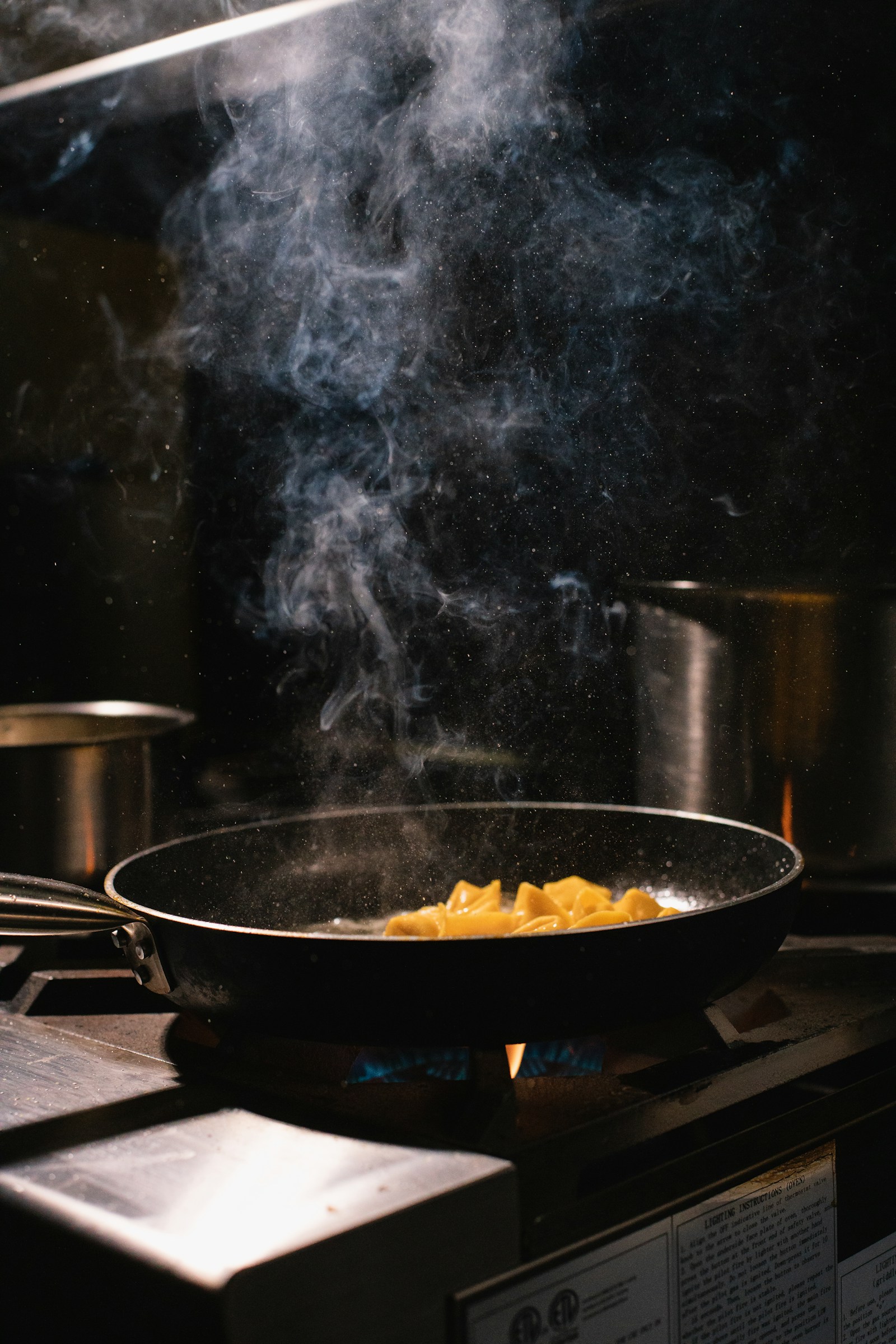
Why does a seared steak taste so much better than a boiled one? The answer is a bit of kitchen chemistry called the Maillard reaction. Once you understand it, you can create deep brown crusts and rich flavors on meat, vegetables and even bread.
What is the Maillard reaction?
The Maillard reaction is a chemical reaction between amino acids and certain sugars in food. It happens when food gets hot enough, usually above about 140°C (285°F). As a result, hundreds of new flavor and aroma compounds form. This is what gives toast, roasted coffee, grilled meat and golden fries their savory, complex taste.
It is named after Louis-Camille Maillard, the French chemist who described it in the early 20th century. Note that it is different from caramelization, which involves sugar alone.
Why wet food does not brown
Here is the key point. Water boils at 100°C (212°F). So as long as the surface of your food is wet, it cannot get hot enough to brown properly. Instead, it steams. That is why boiled meat looks gray and tastes plain.
Secrets of the Maillard reaction for better searing
Dry the surface
Before cooking, pat meat or fish dry with paper towels. For an even better crust, some cooks salt steaks and leave them uncovered in the fridge for a few hours. The surface dries out, so it browns faster.
Heat the pan first
Put the pan on the heat and let it get properly hot before the food goes in. Then add a little oil with a high smoke point. When you add the meat, you should hear a strong sizzle. If you hear only a quiet hiss, the pan is not hot enough.
Don’t crowd the pan
Too much food in one pan cools it down and releases a lot of moisture. Consequently, the food steams instead of searing. So cook in batches and leave space between the pieces.
Leave it alone
It is tempting to move the food around. However, a crust needs time and contact with the hot pan. Wait until the meat releases easily before you flip it. If it sticks, it usually needs a little longer.
Not just for meat
The Maillard reaction works on vegetables too. For example, roast carrots, Brussels sprouts or cauliflower in a hot oven until their edges turn deep brown. They will taste sweeter and nuttier than steamed vegetables. Similarly, toasting bread, nuts or spices builds flavor in the same way.
Brown, not burnt
There is a limit, of course. Deep golden brown is the goal. Black and bitter means you have gone too far. So keep an eye on the color, and lower the heat slightly if the outside darkens too quickly.
Finish with patience
After searing meat, let it rest before slicing. Our guide on why resting meat matters explains how this keeps the juices inside.
The bottom line
The Maillard reaction is the secret behind many of the best flavors in cooking. Keep surfaces dry, use real heat, give food space and be patient. With these habits, you will get deep, savory browning almost every time.